Dwellwise Picks
Browse
Smart climate

Air Quality Monitor vs CO2 Monitor: Which Do You Need?

Current retailer option

16-in-1 Indoor Air Quality Monitor, High-Precision Multi-Parameter Smart Air Quality Tester with HD Real-Time Color Screen, Portable Air Quality Monitor for Home, Office, Cars, Bedroom

Check current price & availability on Amazon

Current price & availability · purchase link

Open the exact family listing to compare the live price, availability, delivery, seller, and returns.

Choose by the pollutant or ventilation question you can act on, then compare sensor coverage, placement, trend access, calibration limits and replacement cost.

Prepared by the Dwellwise Picks editorial deskUpdated September 4, 2026

Quick answer

The practical answer

Choose a dedicated CO2 monitor when the main question is whether occupied rooms need more ventilation. Choose a multi-sensor monitor when you also have a repeatable plan for particulate matter, humidity or volatile-compound trends. Consumer monitors are decision aids rather than regulatory instruments, so buy only sensors tied to actions you can take.

Common buying question

Do you need a multi-sensor indoor air-quality monitor or a dedicated CO2 monitor?

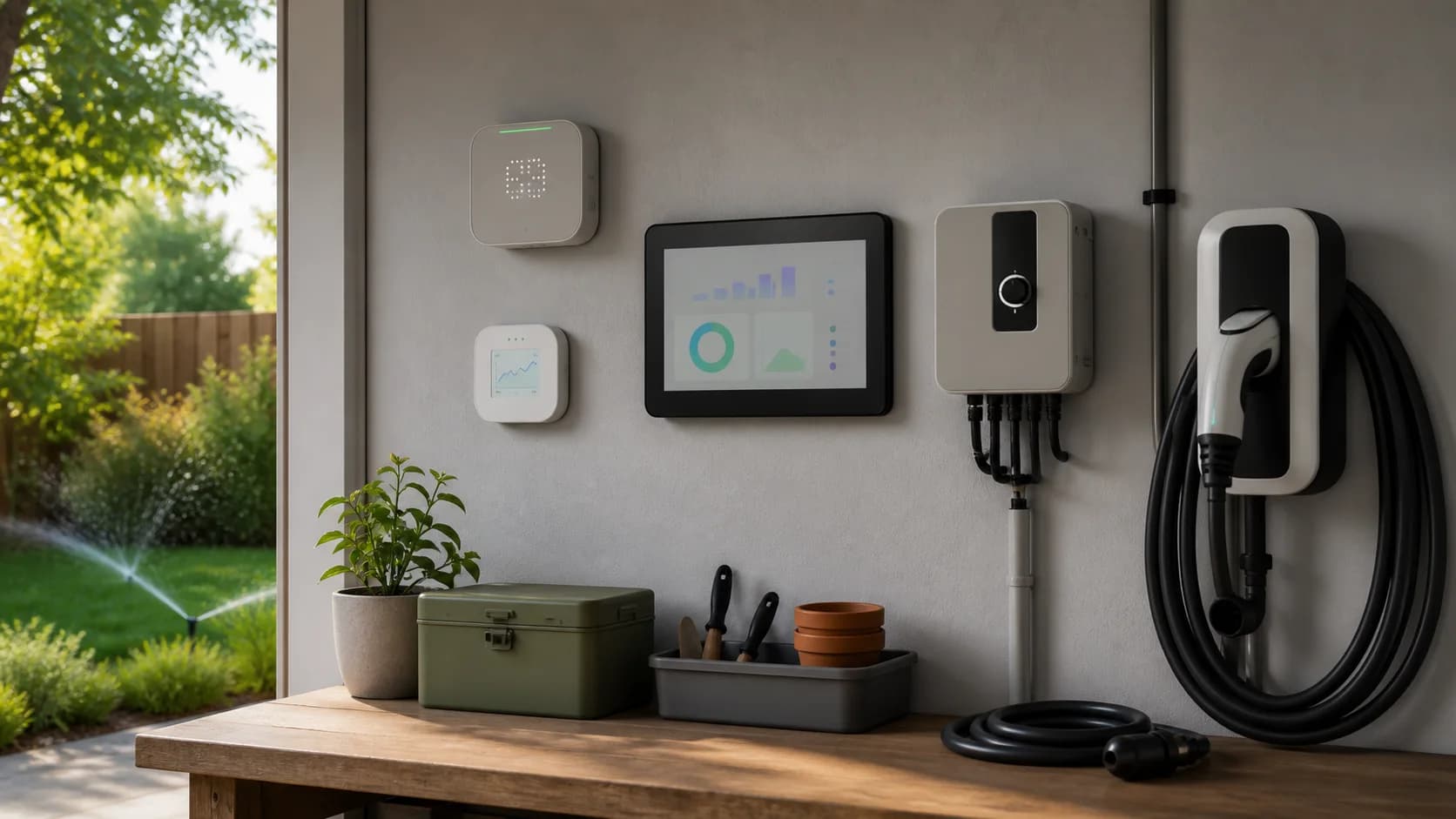
Original editorial scene with unbranded climate, energy, and charging controls
Original editorial image for category, fit, and use context; verify the exact linked product appearance and configuration on the retailer page.

One sensor with an action beats six readings without a plan

Write the room, suspected problem and action threshold before choosing hardware. CO2 can help compare ventilation patterns in occupied spaces; it does not measure every pollutant. A multi-sensor device adds value only when its particulate, humidity or other trends change filtration, source control or ventilation decisions. Confirm what each displayed value actually measures, where the unit must sit and whether history can be exported or reviewed without a subscription.

The real fork is specialized function versus dedicated co2 monitor

multi-sensor air-quality monitor win when they can track the pollutant that matches a known ventilation, smoke, cooking, or occupancy question and that function removes a known recurring problem. dedicated CO2 monitor win when they reach the same outcome with fewer dependencies, less maintenance, a more understandable failure mode, or a cleaner return path.

Normalize PM2.5, CO2, VOC, radon, or other actual sensors and measurement range and calibration

Compare both paths across the same fixture, circuit, controller ecosystem, radio path, owner account, and manual fallback, with every required dependency included. A complete multi-sensor air-quality monitor package should not be compared with an incomplete alternative, and a retailer headline should not replace product-level compatibility evidence.

Use airflow and room placement and local display, history, and data export as tie-breakers

In a multi-sensor air-quality monitor comparison, airflow and room placement and local display, history, and data export reveal the friction that appears after an attractive demo. Choose the path that can be installed, used, cleaned, updated, and recovered by the people who will actually own it. Prefer the simpler failure mode when performance is otherwise close.

Compare ownership, not only purchase price

multi-sensor air-quality monitor bring an ownership path of sensor aging, calibration, replacement intervals, app access, data retention, and the temptation to react to short spikes without context. Price that against the maintenance and replacement work of dedicated co2 monitor over one normal year. Include the value of time and the cost of losing the service while a proprietary part, account, or repair is unavailable.

Make the choice reversible

Use this test path before the return window closes: identify the pollutant first, place the monitor away from direct vents and sources, establish a baseline, then change one ventilation behavior at a time. Preserve the old setup and packaging until the product survives normal use. Choose the alternative immediately when the device estimates rather than measures the needed pollutant or the reading is being used for medical or code compliance without an approved instrument.

Current Amazon option

Check this exact product

16-in-1 Indoor Air Quality Monitor, High-Precision Multi-Parameter Smart Air Quality Tester with HD Real-Time Color Screen, Portable Air Quality Monitor for Home, Office, Cars, Bedroom

ASIN
B0H4YBFYX8
Brand
AQItech
Listing checked
8/9/2026

Compare the current title, ASIN, variant, seller, stock, shipping, price, and return path before ordering.

Side-by-side checks

multi-sensor air-quality monitor vs. dedicated CO2 monitor: the decision table

Checkmulti-sensor air-quality monitordedicated CO2 monitor
Primary questionSeveral indoor trends such as particles, humidity, CO2 or broad VOC response.Occupied-room ventilation patterns through CO2.
InterpretationMore readings require more care about sensor limits and cross-sensitivity.Narrower question is easier to connect to ventilation actions.
PlacementMay require compromises because different sensors prefer different conditions.Can be placed specifically for the occupied-room CO2 question.
Best fitHouseholds with multiple defined air-quality actions.Classrooms, bedrooms or offices focused mainly on ventilation trends.
Decision proofRecord why multi-sensor air-quality monitor solves the repeated job under real conditions.Record why dedicated co2 monitor solves the same job with a clearer fit or ownership path.
Recheck pointRecheck the choice after normal use, maintenance, and one recoverable failure of multi-sensor air-quality monitor.Keep dedicated co2 monitor available until the new path passes that test.

Primary sources

References used for this guide

  • U.S. EPA — Indoor Air Quality

    Authoritative indoor-air and source-control baseline; consumer sensors are not regulatory instruments. Verify the exact product instructions and current listing separately.

Public owner context

Questions to answer before buying

Community discussions help surface installation, fit, maintenance, and failure questions. They are anecdotal context, not product specifications or a substitute for current instructions.

  • Reddit community discussion

    Indoor Air Quality monitors?

    A public owner discussion used to identify questions and failure modes. Comments are anecdotal; no username, vote count, rating, or verbatim review is reproduced, and product facts must be verified independently.

Research notes

How we evaluated these choices

  1. 1.Answer the exact A-versus-B decision before broader fit, ownership, and workflow guidance.
  2. 2.Define one independent purchase or use question for this URL.
  3. 3.Verify the four family-specific dimensions: PM2.5, CO2, VOC, radon, or other actual sensors; measurement range and calibration; airflow and room placement; local display, history, and data export.
  4. 4.Use an exact Amazon ASIN only as a current retailer identity and checkout anchor, not as hands-on evidence.
  5. 5.Separate public community discussion from official specifications and editorial judgment.
  6. 6.Keep a written stop condition and a reversible test path.

Related guide

Indoor air-quality Monitors Buying Guide

Which indoor air-quality monitors are worth buying when the real job is to track the pollutant that matches a known ventilation, smoke, cooking, or occupancy question? This guide turns that question into model-level checks, a reversible setup, a first-year ownership plan, and a clear skip decision.

Related guide

Indoor air-quality Monitors: Compatibility and Fit Guide

Will indoor air-quality monitors fit the exact user, space, equipment, and installation path? This guide turns that question into model-level checks, a reversible setup, a first-year ownership plan, and a clear skip decision.

Related guide

Indoor air-quality Monitors: Ownership Cost and Maintenance

What will indoor air-quality monitors cost and require after checkout? This guide turns that question into model-level checks, a reversible setup, a first-year ownership plan, and a clear skip decision.

Related guide

Indoor air-quality Monitors: Setup and Daily Workflow

How should indoor air-quality monitors be set up and used without adding a new daily chore? This guide turns that question into model-level checks, a reversible setup, a first-year ownership plan, and a clear skip decision.

Related guide

Temperature and Humidity Sensors Buying Guide

Which temperature and humidity sensors are worth buying when the real job is to measure room conditions for comfort, storage, plant, or HVAC decisions? This guide turns that question into model-level checks, a reversible setup, a first-year ownership plan, and a clear skip decision.

Related guide

Whole-Home Energy Monitor vs Smart Plug: Which Is Better?

Compare panel-level and plug-level monitoring by the loads you need to identify, installation risk, measurement granularity, app dependence and the actions that can repay the setup.

Related guide

Smart Smoke and CO Listeners Buying Guide

Which smart smoke and co listeners are worth buying when the real job is to send remote notifications when an existing compatible alarm sound is detected? This guide turns that question into model-level checks, a reversible setup, a first-year ownership plan, and a clear skip decision.

Related guide

Whole-Home Energy Monitor: Cloud, Local Data, and Installation Guide

Compare panel fit, sensor count, electrician work, network dependence, data retention, and actionable household decisions.