Dwellwise Picks
Browse
Automation basics

Smart Power Strips vs. individual smart plugs

Current retailer option

kasa smart Plug Power Strip KP303, Surge Protector with 3 Individually Controlled Smart Outlets and 2 USB Ports, Works with Alexa & Google Home, No Hub Required , White | Surge Protector with 3 Individually Controlled Smart Outlets and 2 USB Ports, Works with Alexa & Google Home

Check current price & availability on Amazon

Current price & availability · purchase link

Open the exact family listing to compare the live price, availability, delivery, seller, and returns.

Choose between smart power strips and individual smart plugs for one concrete job: control several low-risk plug-in devices while keeping outlet-level schedules and energy use organized. Compare four product-level checks, ownership cost, and the failure mode you can actually recover.

Prepared by the Dwellwise Picks editorial deskUpdated August 9, 2026

Quick answer

The practical answer

Smart power strips are the stronger choice when their specialized path can control several low-risk plug-in devices while keeping outlet-level schedules and energy use organized. Choose individual smart plugs when it reaches the same outcome with fewer fit, setup, or maintenance dependencies—especially when heaters, medical, refrigeration, motor, or other high-consequence loads are unsupported, or one ordinary surge strip is safer.

Common buying question

Should you choose smart power strips or individual smart plugs for this job?

The buying page asks whether to enter the category; this page decides between smart power strips and individual smart plugs.

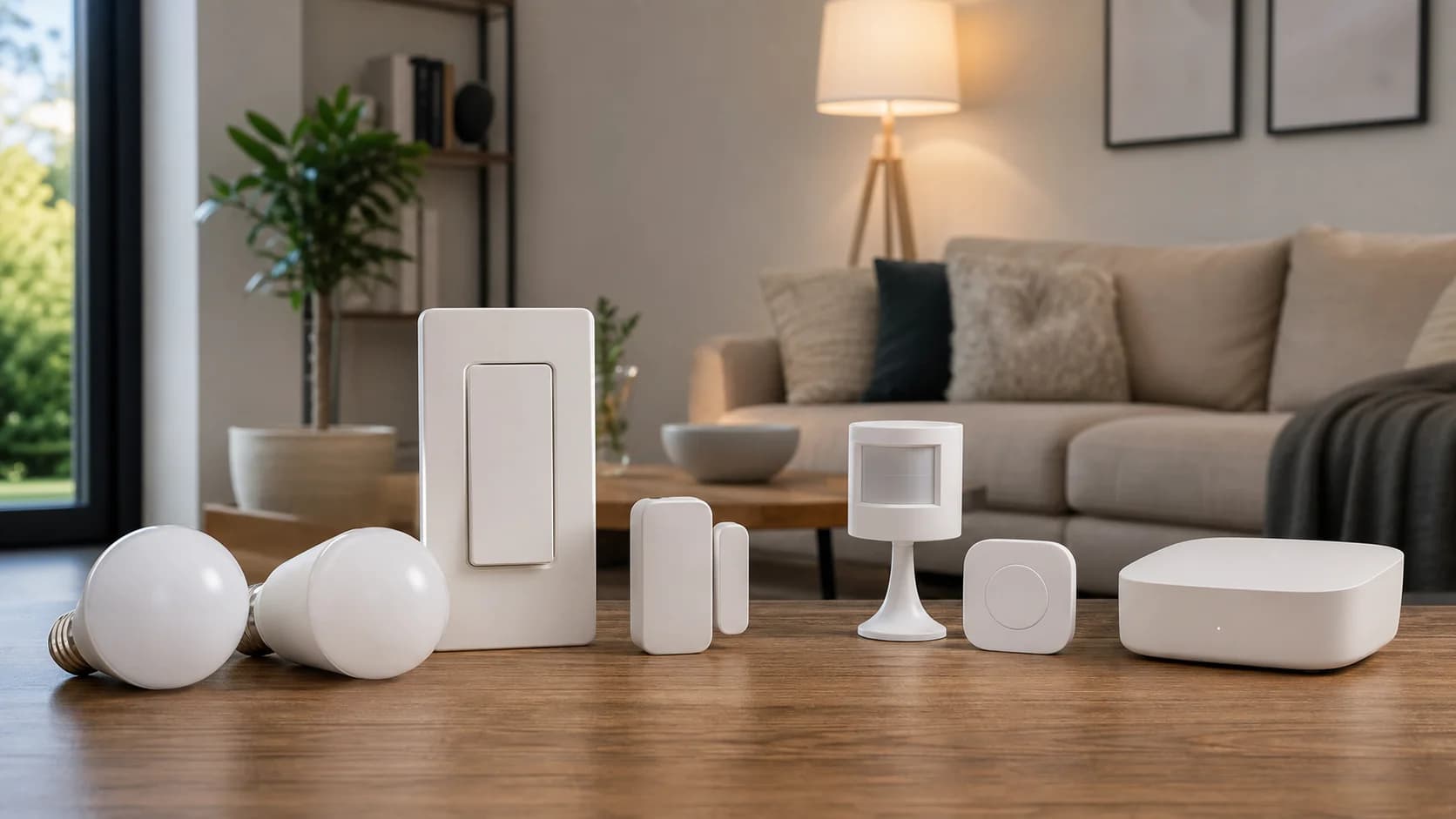
Original editorial scene with unbranded smart-home automation controls and sensors
Original editorial image for category, fit, and use context; verify the exact linked product appearance and configuration on the retailer page.

The real fork is specialized function versus individual smart plugs

Smart power strips win when they can control several low-risk plug-in devices while keeping outlet-level schedules and energy use organized and that function removes a known recurring problem. individual smart plugs win when they reach the same outcome with fewer dependencies, less maintenance, a more understandable failure mode, or a cleaner return path.

Normalize individually controlled versus always-on outlets and total strip and per-outlet load

Compare both paths across the same fixture, circuit, controller ecosystem, radio path, owner account, and manual fallback, with every required dependency included. A complete smart power strips package should not be compared with an incomplete alternative, and a retailer headline should not replace product-level compatibility evidence.

Use USB port behavior and surge rating, spacing, and local button access as tie-breakers

In a smart power strips comparison, USB port behavior and surge rating, spacing, and local button access reveal the friction that appears after an attractive demo. Choose the path that can be installed, used, cleaned, updated, and recovered by the people who will actually own it. Prefer the simpler failure mode when performance is otherwise close.

Compare ownership, not only purchase price

Smart power strips bring an ownership path of standby power, app access, lost schedules, surge-protection life, cable clutter, and replacing the entire strip after one control failure. Price that against the maintenance and replacement work of individual smart plugs over one normal year. Include the value of time and the cost of losing the service while a proprietary part, account, or repair is unavailable.

Make the choice reversible

Use this test path before the return window closes: label each outlet, connect only supported loads, create schedules one device at a time, and test what happens after internet and power loss. Preserve the old setup and packaging until the product survives normal use. Choose the alternative immediately when heaters, medical, refrigeration, motor, or other high-consequence loads are unsupported, or one ordinary surge strip is safer.

Current Amazon option

Check this exact product

kasa smart Plug Power Strip KP303, Surge Protector with 3 Individually Controlled Smart Outlets and 2 USB Ports, Works with Alexa & Google Home, No Hub Required , White | Surge Protector with 3 Individually Controlled Smart Outlets and 2 USB Ports, Works with Alexa & Google Home

ASIN
B083JKSSR5
Brand
Brand shown on the Amazon listing
Listing checked
8/9/2026

Compare the current title, ASIN, variant, seller, stock, shipping, price, and return path before ordering.

Side-by-side checks

Smart power strips and individual smart plugs: the decision dimensions

CheckSmart power stripsindividual smart plugs
Primary jobBest when the product can control several low-risk plug-in devices while keeping outlet-level schedules and energy use organized.Best when the same outcome needs fewer specialized dependencies.
Check 1Verify individually controlled versus always-on outlets.Confirm the alternative removes or simplifies individually controlled versus always-on outlets.
Check 2Verify total strip and per-outlet load.Confirm the alternative removes or simplifies total strip and per-outlet load.
Check 3Verify USB port behavior.Confirm the alternative removes or simplifies USB port behavior.
Check 4Verify surge rating, spacing, and local button access.Confirm the alternative removes or simplifies surge rating, spacing, and local button access.
Skip signalSkip when heaters, medical, refrigeration, motor, or other high-consequence loads are unsupported, or one ordinary surge strip is safer.Prefer the alternative only after confirming it solves the same repeated problem.

Primary sources

References used for this guide

Public owner context

Questions to answer before buying

Community discussions help surface installation, fit, maintenance, and failure questions. They are anecdotal context, not product specifications or a substitute for current instructions.

How this page was governed

Page-specific editorial method

  1. 1.Define one independent purchase or use question for this URL.
  2. 2.Verify the four family-specific dimensions: individually controlled versus always-on outlets; total strip and per-outlet load; USB port behavior; surge rating, spacing, and local button access.
  3. 3.Use an exact Amazon ASIN only as a current retailer identity and checkout anchor, not as hands-on evidence.
  4. 4.Separate public community discussion from official specifications and editorial judgment.
  5. 5.Keep a written stop condition and a reversible test path.

Related guide

Smart Power Strips Buying Guide

Which smart power strips are worth buying when the real job is to control several low-risk plug-in devices while keeping outlet-level schedules and energy use organized? This guide turns that question into model-level checks, a reversible setup, a first-year ownership plan, and a clear skip decision.

Related guide

Smart Power Strips: Compatibility and Fit Guide

Will smart power strips fit the exact user, space, equipment, and installation path? This guide turns that question into model-level checks, a reversible setup, a first-year ownership plan, and a clear skip decision.

Related guide

Smart Power Strips: Ownership Cost and Maintenance

What will smart power strips cost and require after checkout? This guide turns that question into model-level checks, a reversible setup, a first-year ownership plan, and a clear skip decision.

Related guide

Smart Power Strips: Setup and Daily Workflow

How should smart power strips be set up and used without adding a new daily chore? This guide turns that question into model-level checks, a reversible setup, a first-year ownership plan, and a clear skip decision.

Related guide

Matter Over Thread Hub: Controller and Border Router Checklist

Match the Matter controller, Thread border router, Wi-Fi path, ecosystem, and accessory before buying a hub for Matter over Thread devices.

Related guide

Matter vs Zigbee vs Thread: Which Smart-Home Standard Do You Need?

Understand Matter vs Zigbee vs Thread, including radios, controllers, border routers, hubs, compatibility, and offline control.

Related guide

Water Leak Sensor Placement Guide

Put sensors where water appears first: under appliances, inside sink cabinets, by shutoff valves, near sump pumps, and around basement equipment.

Related guide

Wi-Fi vs Zigbee vs LoRa Water Leak Sensors

Choose the radio by room and response plan: simple Wi-Fi gateway kits, hub-based Zigbee automations, or long-range LoRa for basements and outbuildings.

Smart Power Strips vs. individual smart plugs