Open the exact family listing to compare the live price, availability, delivery, seller, and returns.
Choose a connected dehumidifier by test-condition capacity, actual space moisture load, low-temperature operation, bucket ergonomics, gravity or pump drainage, energy use, sound, app privacy, and offline controls.
Prepared by the Dwellwise Picks editorial deskUpdated August 10, 2026
Quick answer
The practical answer
Choose moisture-removal capacity and drainage first; room-square-foot claims are only rough filters. Verify the model's current pint rating, operating temperature, bucket weight, gravity-drain height or pump behavior, and Energy Star record. Wi-Fi is useful for remote humidity and full-bucket alerts, but the unit should retain safe local controls and restart behavior without the app.
Common buying question
What size smart dehumidifier should I buy for a basement, and is Wi-Fi useful if I use continuous drainage?
Existing climate pages do not decide pint capacity, lift-and-twist bucket handling, drain elevation, frost behavior, or whether connected monitoring changes maintenance.
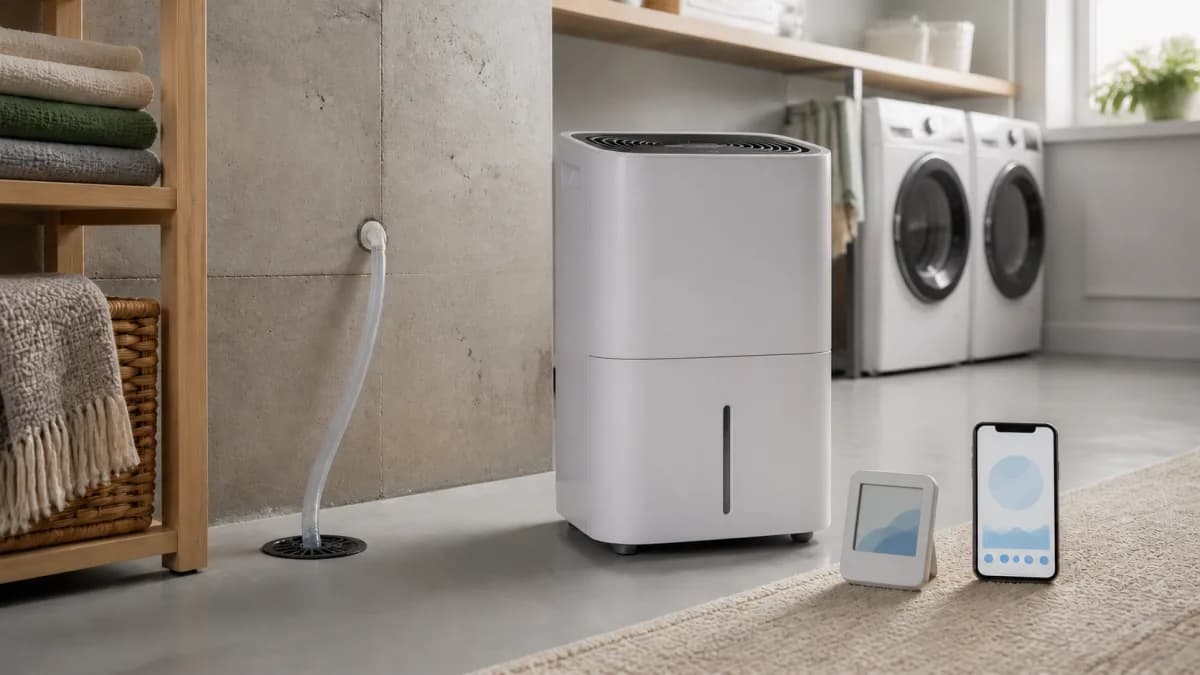
Original editorial image for category, fit, and use context; verify the exact linked product appearance and configuration on the retailer page.
Fix water entry before sizing the machine
A dehumidifier manages airborne moisture; it does not repair foundation seepage, plumbing leaks, roof or gutter problems, missing vapor control, or unsafe drainage. Inspect the space and address bulk water first. Log relative humidity and temperature in representative locations, then note laundry, showers, exterior doors, crawlspace air, and seasonal changes that increase the actual moisture load.
Use certified capacity, not only square feet
Compare the exact model's current pint-per-day rating and Energy Star record. Coverage numbers are marketing shortcuts that do not express starting humidity, air exchange, temperature, or water entry. A larger certified unit can run shorter cycles, but only if airflow reaches the damp area and controls can sense representative air rather than a dry corner beside the outlet.
Choose the condensate path before the cabinet style
For bucket use, simulate lifting a nearly full container, carrying it without slosh, and replacing it correctly. For continuous gravity drainage, the entire hose needs reliable downward fall to an approved destination without kinks. A built-in pump is a different feature and adds maintenance. Never route water where a blockage, freeze, or overflow can damage the building.
Check low-temperature, heat, and electrical placement
Dehumidifiers release heat into the room and can frost in cooler conditions. Verify the operating range and defrost behavior, provide specified clearances, keep the filter accessible, and use a suitable grounded outlet without an improvised extension. Sound and warm exhaust can matter near bedrooms or offices even when the moisture capacity is correct.
Make the app prove its value
Useful connectivity can show humidity trends, full-bucket state, faults, and schedules from outside the room. Verify which functions remain local if Wi-Fi or the service fails and what happens after power returns. The app cannot inspect a hose, clean a filter, empty a bucket, or discover hidden water damage, so assign those physical checks on a written schedule.
Current Amazon option
Check this exact product
Midea Cube 20-Pint Smart WiFi Dehumidifier MAD20S1QWT with Drain Hose
ASIN
B08ZMY8BC8
Brand
Midea
Listing checked
8/10/2026
Compare the current title, ASIN, variant, seller, stock, shipping, price, and return path before ordering.
Exact Midea MAD20S1QWT 20-pint Cube draft anchor; recheck model suffix, seller, and availability.
Public owner context
Questions to answer before buying
Community discussions help surface installation, fit, maintenance, and failure questions. They are anecdotal context, not product specifications or a substitute for current instructions.
Used to identify recurring ownership questions about hose routing, bucket lifting, cold basements, and humidity targets; no anecdote is presented as measured product performance.
How this page was governed
Page-specific editorial method
1.Measure humidity over several days and investigate leaks or water entry before treating the appliance as the root fix.
2.Compare current certified pint capacity and exact model suffixes rather than older naming conventions.
3.Dry-run the bucket or hose route, filter access, electrical outlet, clearance, and condensate destination.
4.Test local controls, app alerts, power restoration, full-bucket shutoff, and drainage under observation.