Open the exact family listing to compare the live price, availability, delivery, seller, and returns.
Choose a connected humidifier by room volume, output, cool or warm mist, cleanability, water quality, target humidity, sensor placement, refill path, and app behavior.
Prepared by the Dwellwise Picks editorial deskUpdated August 11, 2026
Quick answer
The practical answer
Choose output for the room and climate, but prioritize a tank and base you can empty, scrub, rinse, and dry frequently. Use a separate hygrometer away from the mist plume to verify room conditions; a sensor beside the outlet can misread its own moisture. Keep indoor humidity within health and building guidance, avoid mineral aerosol with appropriate water, and stop if condensation appears.
Common buying question
What size smart humidifier should I buy, and can its built-in humidity sensor prevent over-humidifying a bedroom?
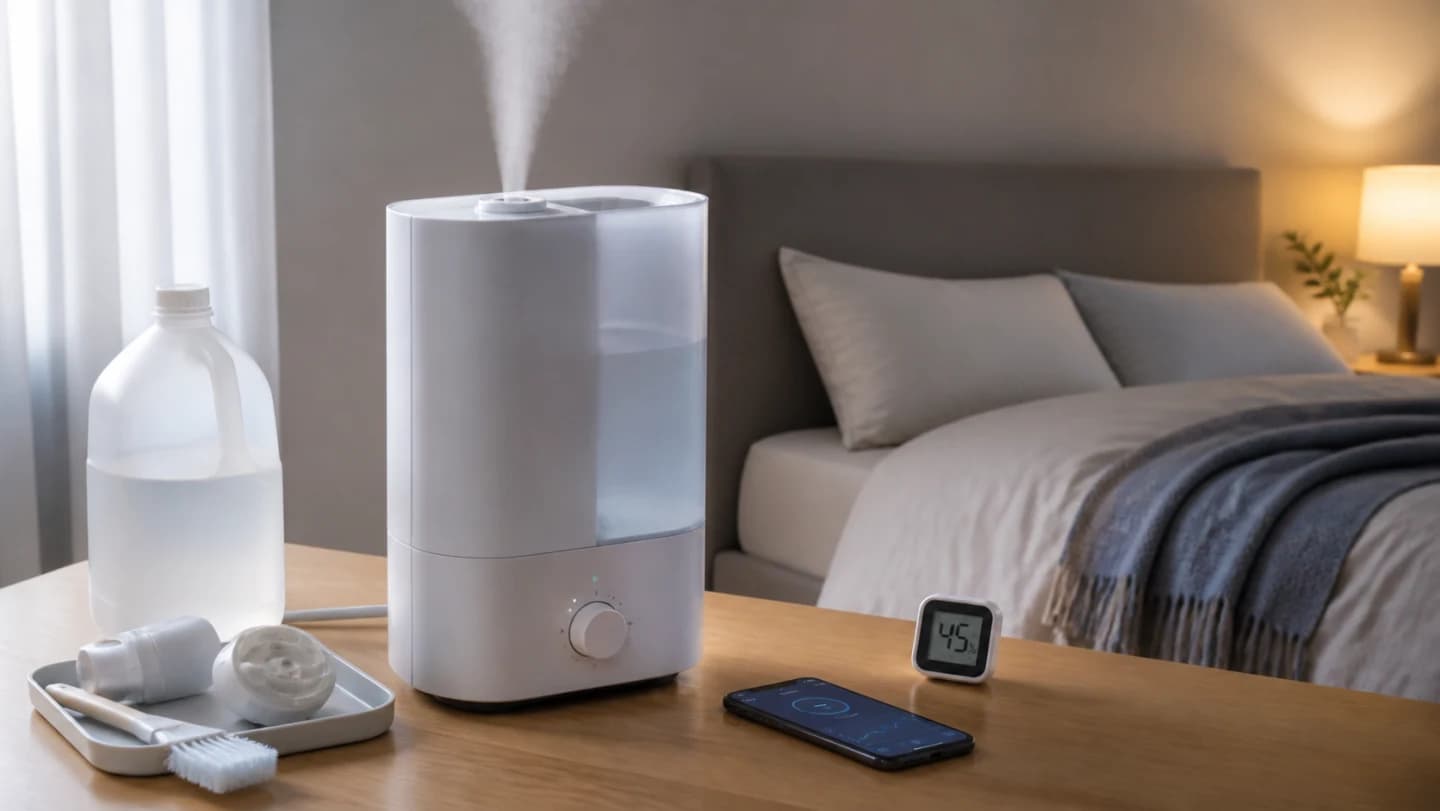
Original editorial image for category, fit, and use context; verify the exact linked product appearance and configuration on the retailer page.
Confirm the room actually needs humidity
Measure with a separate hygrometer before and during use. Dry-feeling air does not reveal the whole room's relative humidity, and moisture can condense first on cold windows, exterior walls, or hidden surfaces. Seasonal conditions change quickly. Set a conservative target consistent with health and building guidance and reduce output at the first condensation or musty sign.
Choose a technology with known tradeoffs
Ultrasonic cool mist can be quiet and efficient but may disperse minerals from tap water. Evaporative units use a wick and fan that add noise and replacement parts. Warm mist adds heat and burn risk. The right choice depends on water quality, household access, sleeping noise, maintenance tolerance, and the exact manual's placement restrictions.
Inspect every wet surface before buying
Remove the tank and imagine emptying, wiping, scrubbing crevices, reaching the transducer or reservoir, rinsing, and air-drying parts. A top-fill opening helps refills but does not guarantee the base is cleanable. Follow daily water replacement and manufacturer cleaning instructions; do not mix chemicals or essential oils unless the exact model explicitly permits them.
Verify humidity away from the plume
The built-in sensor is useful for control but sits near the appliance and can see locally humid air. Place an independent hygrometer at breathing-zone height away from direct mist, windows, supply vents, and exterior walls. Compare trends rather than expecting two consumer sensors to match perfectly, and keep mist from wetting bedding, furniture, electronics, or the wall.
Use the app to support, not replace, care
Schedules and remote setpoints can prevent unnecessary all-day operation, while alerts may help with refills. Essential control should remain local and the unit should behave safely after power or network loss. No app knows whether old water smells, scale has formed, the tank leaks, or the room has condensation; assign those physical checks to a person.
Current Amazon option
Check this exact product
DREO Smart Humidifiers for Bedroom, 4L Cool Mist Humidifier | Top Fill, Quiet Sleep 28 dB, 36H Runtime for large room, Touch/APP/Voice Control, Nightlight, ideal for Baby, Plants, Nursery
ASIN
B0CCVX6FSD
Brand
Brand shown on the Amazon listing
Listing checked
8/11/2026
Compare the current title, ASIN, variant, seller, stock, shipping, price, and return path before ordering.
Exact US listing reference. Confirm the selected variation, seller, included parts, live availability, and any applicable recall notice before buying.
Public owner context
Questions to answer before buying
Community discussions help surface installation, fit, maintenance, and failure questions. They are anecdotal context, not product specifications or a substitute for current instructions.
Used to locate real owner questions and failure reports that shape the inspection checklist. Anecdotes are not presented as measured product tests or copied as endorsements.
Research notes
How we evaluated these choices
1.Measure baseline humidity in several room locations before deciding that more moisture is needed.
2.Read the exact manual's daily and periodic cleaning steps and inspect whether every wet surface is reachable.
3.Run at a conservative setpoint with a separate hygrometer away from the unit and exterior walls.
4.Record water type, refill owner, cleaning cadence, condensation stop rule, and end-of-season storage procedure.