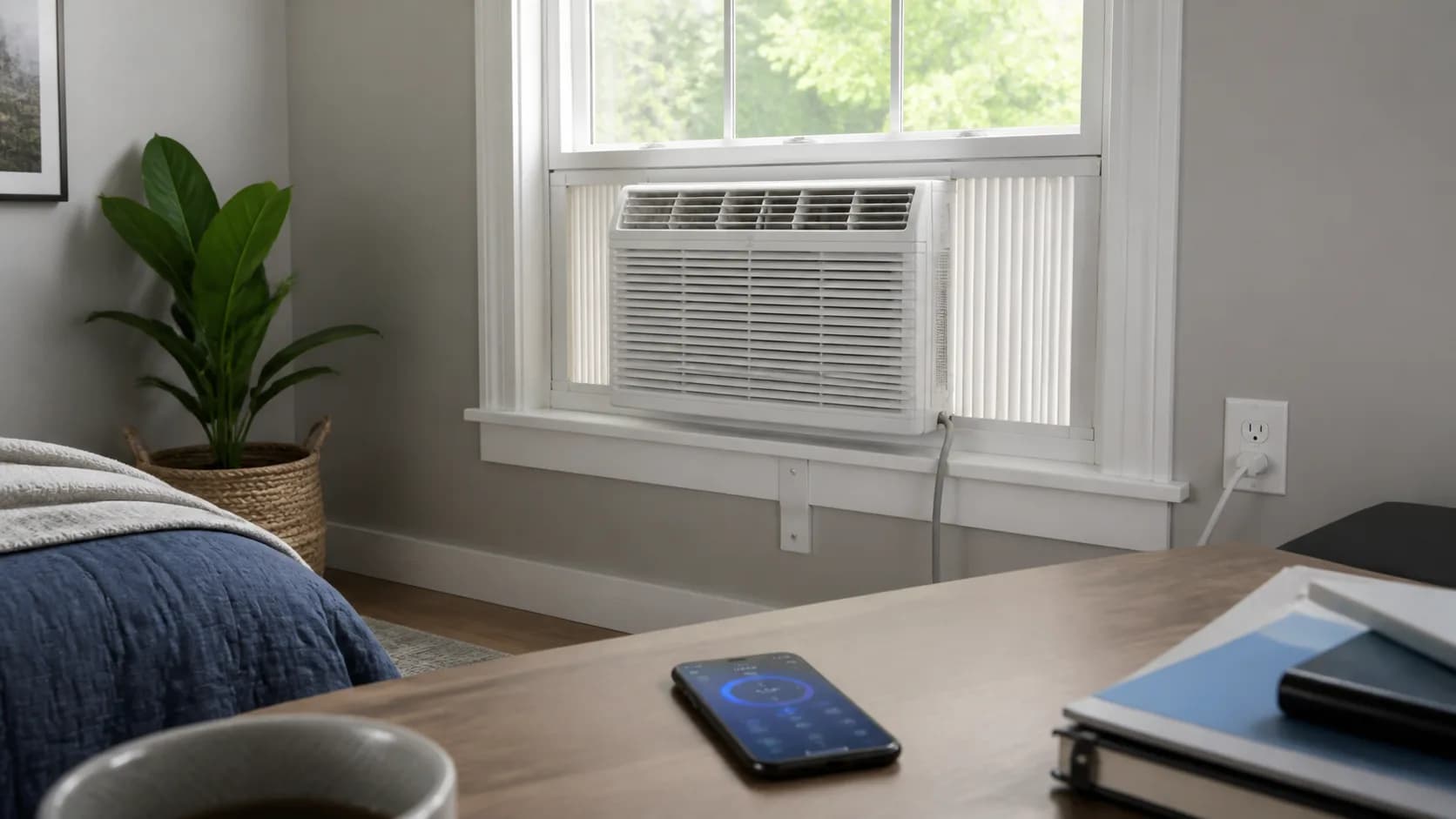
Size the cooling job before choosing features
Measure the room and adjust for sun exposure, ceiling height, occupancy, cooking, and heat-producing office equipment. Use current sizing guidance rather than automatically buying the largest BTU number. The product must manage humidity and normal load without making short cycles, drafts, or constant maximum operation the default.
Measure the complete window opening
Record opening width and height, sash travel, sill and stool depth, storm window, exterior obstruction, screen removal, wall thickness, unit weight, and the manufacturer's required support. A U- or saddle-shaped chassis can preserve more view but creates its own sill and wall-clearance rules.
Verify electricity, support, sealing, and water
Use the stated voltage and plug on a suitable grounded circuit; follow the manual on extension cords and shared loads. Install approved brackets and anti-tip or sash restraints where required. Plan seasonal air sealing, condensate direction, exterior clearance, filter access, and safe removal or storage.
Evaluate noise and smart control in the real routine
Bedroom and meeting-room use is affected by compressor transitions, fan pitch, chassis vibration, street opening, and notification sounds—not just one laboratory number. Confirm physical controls, scheduling, shared access, privacy, router or internet outage behavior, power-loss restart, and whether a smart plug is prohibited for the appliance.
Run a recall and identity check
Before purchase and installation, match brand, exact model, serial range, manufacture information, and any open safety notice through the manufacturer and CPSC. Do the same for used or transferred units. Skip the connected premium when a correctly sized non-connected inverter model meets the schedule through reliable onboard controls.