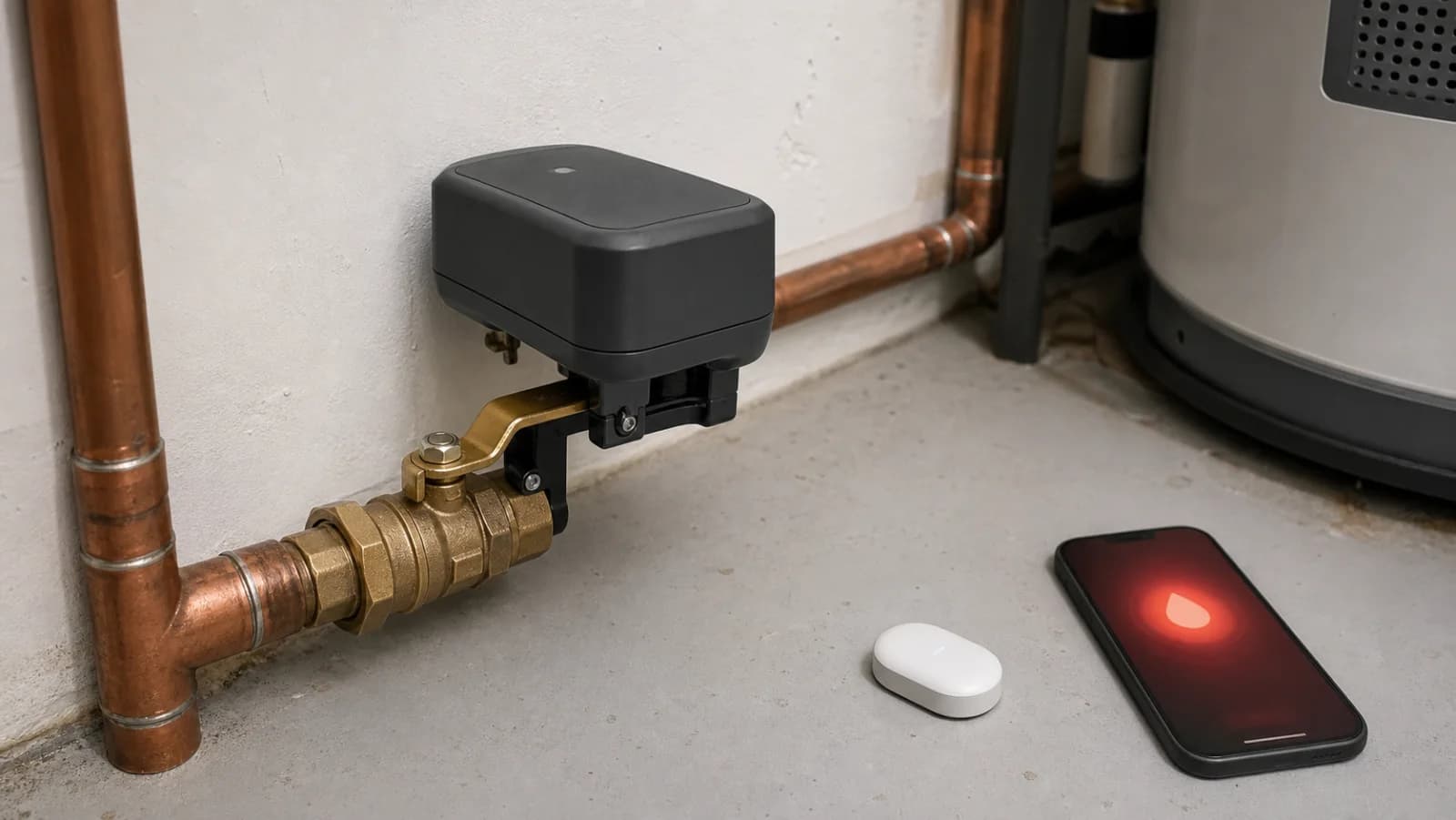
1. Identify the system before touching the valve
Find the main water shutoff, pipe material, pipe size, pressure regulator, irrigation branches, shared-building plumbing, well equipment, and any fire-suppression branch. Stop and use a qualified plumber when the layout is uncertain.
2. Inspect the existing valve
Record whether it is a lever ball valve, butterfly valve, gate valve, or another design. Look for corrosion, leakage, bent handles, packing damage, stiffness, wall contact, and incomplete 90-degree travel. Do not use a motor to overcome a valve that needs repair.
3. Measure the actuator envelope
Photograph and measure the pipe diameter, handle length, stem area, full handle sweep, wall gap, adjacent pipes, insulation, shelves, and service access. Leave room to remove batteries, clamps, and the actuator later.
4. Treat inline products as plumbing projects
Confirm the exact model for the measured pipe size, straight-pipe length, unions, flow direction, pressure range, grounding, sediment conditions, approved power, Wi-Fi, drainage risk, local code, and installer responsibility before ordering.
5. Protect fire suppression and shared systems
A consumer smart shutoff must not disable a fire-sprinkler or suppression line. Shared dwellings, irrigation branches, well systems, recirculation, and complex service layouts require professional and code review before any closure automation is enabled.
6. Preserve manual access
The household needs a visible, reachable manual shutoff even when automation works. Label it, keep the route clear, and document how to override the system during battery, hub, power, network, app, or actuator failure.