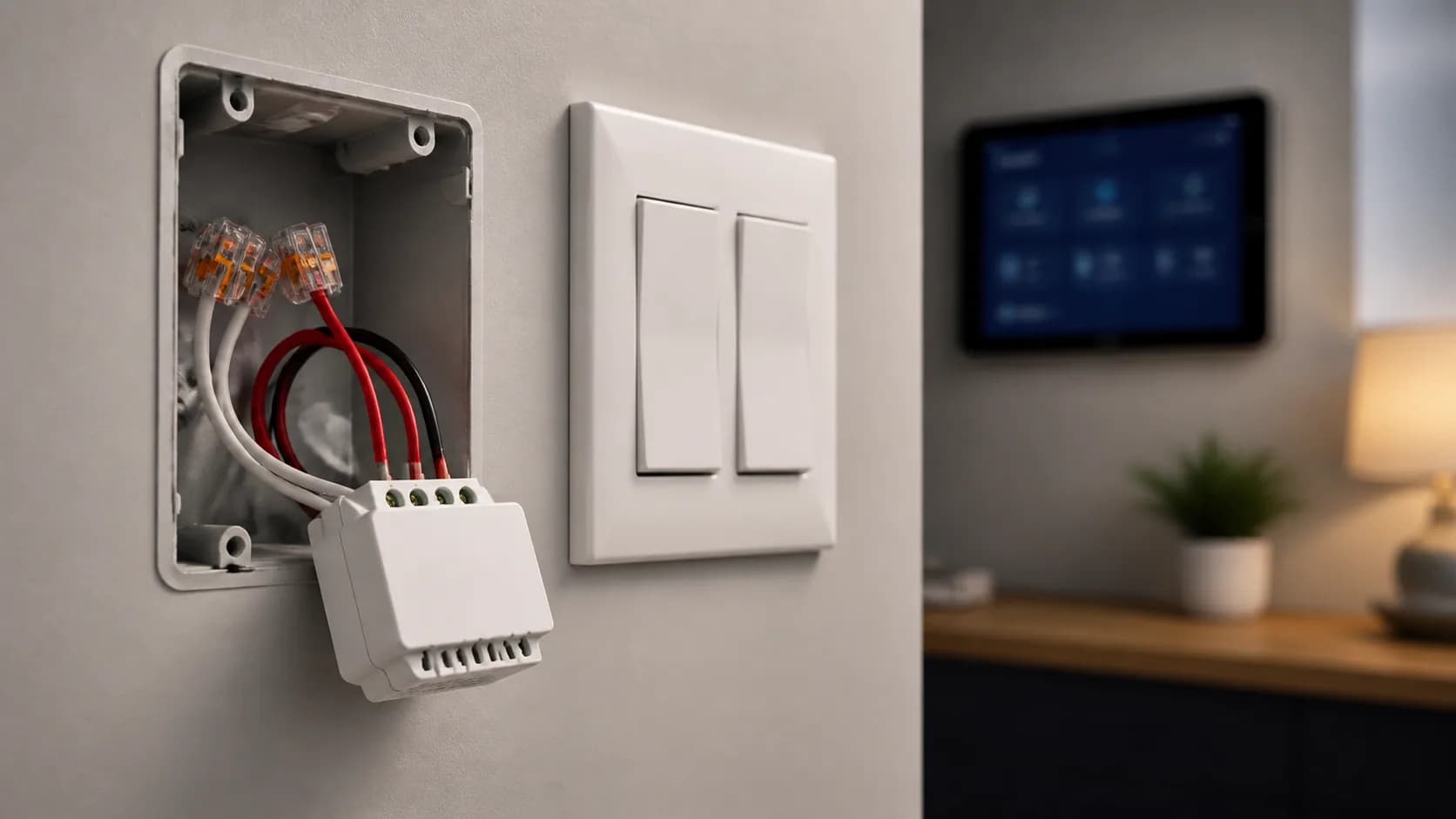
Photograph and identify the circuit first
Turn off and verify power according to appropriate electrical practice, then record line, load, neutral, ground, travelers, switch loops, box material, depth, conductor count, and the connected equipment. Wire color alone does not prove function. If the circuit cannot be confidently identified, stop and use a qualified electrician.
Match the relay to the load, not just voltage
Lighting drivers, motors, contactors, garage controls, and resistive loads behave differently. Check operating voltage, maximum current, inrush, load type, dry-contact isolation, required protection, and whether the relay is permitted in the intended enclosure. Never extend a rating from a similar model or a community diagram.
Plan the physical enclosure
A relay adds volume, terminations, and heat behind the existing device. Apply box-fill rules, conductor bend space, terminal torque, antenna placement, service access, and local code. Do not compress conductors until the device fits or bury a module where it cannot be identified, reset, inspected, or replaced.
Define what works without each service
Test the wall input first, then local network control, hub automation, internet outage, account outage, and power restoration. Matter support does not by itself prove every advanced setting is exposed to every platform. Record the recovery and factory-reset path before handing the control to household routines.
When a finished smart switch is better
Use a complete listed smart switch when it matches the load and wiring, provides the required physical control, and avoids squeezing a separate module into the box. Skip the retrofit when the neutral, enclosure, heat, certification, or maintenance path is uncertain. Preserving the old switch appearance is not worth an unsafe or unserviceable installation.