Dwellwise Picks
Browse
Automation basics

Smart Smoke and CO Alarm Buying Guide: Listings, Power, and Interconnect

Current retailer option

First Alert SC5 Hardwire Smart Smoke and Carbon Monoxide Alarm SMCO600NV-AC

Check current price & availability on Amazon

Current price & availability · purchase link

Open the exact family listing to compare the live price, availability, delivery, seller, and returns.

Choose a connected smoke and carbon-monoxide alarm by current safety listing, sensing role, hardwire or battery power, compatible interconnect, room placement, app behavior, voice alerts, and end-of-life plan.

Prepared by the Dwellwise Picks editorial deskUpdated August 10, 2026

Quick answer

The practical answer

Safety listing, required placement, power type, and whole-home interconnect come before app features. Match hardwired or battery installation to the existing circuit and confirm exactly which alarms sound together. Phone notifications are supplemental: the alarms must still detect, sound locally, be tested regularly, and be replaced at end of life according to their instructions.

Common buying question

Which smart smoke and carbon monoxide alarm should I buy to replace an expiring Nest Protect or add phone alerts?

The existing smart smoke/CO listener page leaves the certified detection devices in place; this page selects the detectors themselves and must not blur that safety boundary.

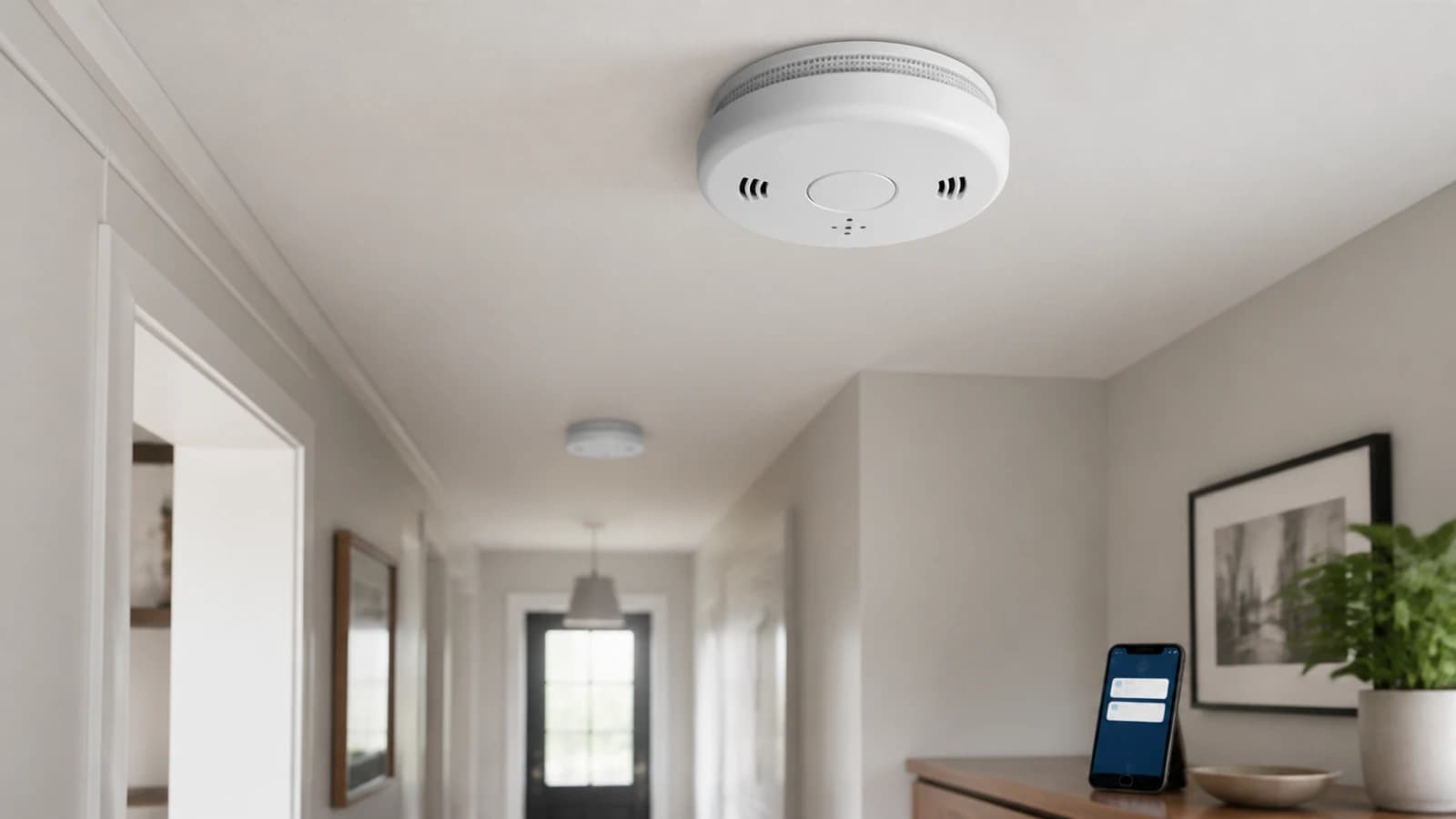
Editorial ceiling and app scene representing a smart smoke and carbon monoxide alarm system
Original editorial image for category, fit, and use context; verify the exact linked product appearance and configuration on the retailer page.

Start with the required alarm plan

Inventory smoke and CO alarms by floor, bedroom, sleeping area, power source, age, and interconnect. Check local requirements and the alarm instructions before changing hardware. A phone-connected detector does not reduce the number of alarms needed. When wiring or required placement is uncertain, involve the local authority, electrician, or fire-safety professional appropriate to the work.

Choose the exact power and interconnect model

Hardwired alarms need the correct circuit, connector or approved adapter, backup power, and interconnect behavior. Battery models avoid mains wiring but still have defined battery and replacement rules. Confirm the exact compatibility chart: a product may coexist in one app with another alarm without sharing every audible, voice, test, or wireless-interconnect function.

Put local detection ahead of cloud convenience

The alarm must detect and sound even when internet service, the cloud account, the phone, or notifications fail. App status, remote tests, and mobile alerts can improve awareness, but they are not the primary warning path. Verify Wi-Fi requirements and account ownership so a household can maintain the device without depending on one person's phone.

Test the installed system and escape plan

Use the model's test procedure and confirm that every intended compatible alarm responds. Verify voice location labels and that household members can hear and understand warnings. Practice an escape plan, establish a meeting point, and know what to do for a CO alarm. Never disable, cover, or relocate a nuisance alarm without following qualified guidance.

Manage batteries, dates, and recalls

Record manufacture, installation, and replacement dates where they can be found later. Follow the manual for monthly tests, cleaning, battery replacement, fault indicators, and end-of-life chirps. Before publication and purchase, check the exact SKU against current manufacturer and CPSC notices. A ten-year product claim is a replacement horizon, not permission to skip maintenance.

Current Amazon option

Check this exact product

First Alert SC5 Hardwire Smart Smoke and Carbon Monoxide Alarm SMCO600NV-AC

ASIN
B0DS2VG4P1
Brand
First Alert
Listing checked
8/10/2026

Compare the current title, ASIN, variant, seller, stock, shipping, price, and return path before ordering.

Side-by-side checks

Smart alarm decisions in safety order

CheckVerifyDo not assume
Detection and listingSmoke, CO, current standards, jurisdiction requirementsA smart-home logo makes an alarm suitable for every required location.
PowerHardwire circuit and backup or approved battery configurationBattery and hardwire models are interchangeable without installation work.
InterconnectExact compatible models and wireless or wired methodSharing one app means every alarm will sound together.
PlacementBedrooms, sleeping areas, levels, wall/ceiling limitsThe convenient Wi-Fi location is the correct code and manual location.
AlertsLocal siren, voice, app, connectivity and account requirementsA push notification replaces the audible alarm or an emergency plan.
LifecycleManufacture date, service life, tests, battery and replacement planA connected alarm can stay installed indefinitely if the app shows online.

Primary sources

References used for this guide

Public owner context

Questions to answer before buying

Community discussions help surface installation, fit, maintenance, and failure questions. They are anecdotal context, not product specifications or a substitute for current instructions.

  • Reddit r/Nest

    Nest Protect replacement discussions

    Used only to surface transition questions about mounting, hardwire adapters, app migration, and mixed-alarm homes; safety claims come from the manufacturer, standards, and authorities.

How this page was governed

Page-specific editorial method

  1. 1.Map every required alarm location and identify existing power and interconnect before selecting a connected model.
  2. 2.Verify the exact model's current listing, manual, compatibility chart, and local requirements from authoritative sources.
  3. 3.Install, test, and maintain alarms according to the manufacturer, code, and local fire-safety guidance.
  4. 4.Treat remote alerts as a supplement and document replacement dates, emergency actions, and same-day recall checks.

Related guide

Smart Smoke and CO Listeners Buying Guide

Which smart smoke and co listeners are worth buying when the real job is to send remote notifications when an existing compatible alarm sound is detected? This guide turns that question into model-level checks, a reversible setup, a first-year ownership plan, and a clear skip decision.

Related guide

Smart-home Sirens Buying Guide

Which smart-home sirens are worth buying when the real job is to add a loud local alert to sensors and automations without claiming a monitored alarm service? This guide turns that question into model-level checks, a reversible setup, a first-year ownership plan, and a clear skip decision.

Related guide

Matter Over Thread Hub: Controller and Border Router Checklist

Match the Matter controller, Thread border router, Wi-Fi path, ecosystem, and accessory before buying a hub for Matter over Thread devices.

Related guide

Matter vs Zigbee vs Thread: Which Smart-Home Standard Do You Need?

Understand Matter vs Zigbee vs Thread, including radios, controllers, border routers, hubs, compatibility, and offline control.

Related guide

Water Leak Sensor Placement Guide

Put sensors where water appears first: under appliances, inside sink cabinets, by shutoff valves, near sump pumps, and around basement equipment.

Related guide

Wi-Fi vs Zigbee vs LoRa Water Leak Sensors

Choose the radio by room and response plan: simple Wi-Fi gateway kits, hub-based Zigbee automations, or long-range LoRa for basements and outbuildings.

Related guide

Smart Water Shutoff Valve Fit Checklist

Check valve type, pipe size, handle sweep, torque, clearance, power, Wi-Fi, hub, fire-system boundaries, and manual access before buying an actuator or inline shutoff.

Related guide

Leak Sensor to Automatic Water Shutoff: Build a Safer Response Chain

Connect point detection, a local alarm, household notifications, a compatible valve, supervised closure, manual fallback, and recovery without trusting one cloud rule.

Smart Smoke and CO Alarm Buying Guide: Listings, Power, and Interconnect